We will reply you within 12 hours.
-
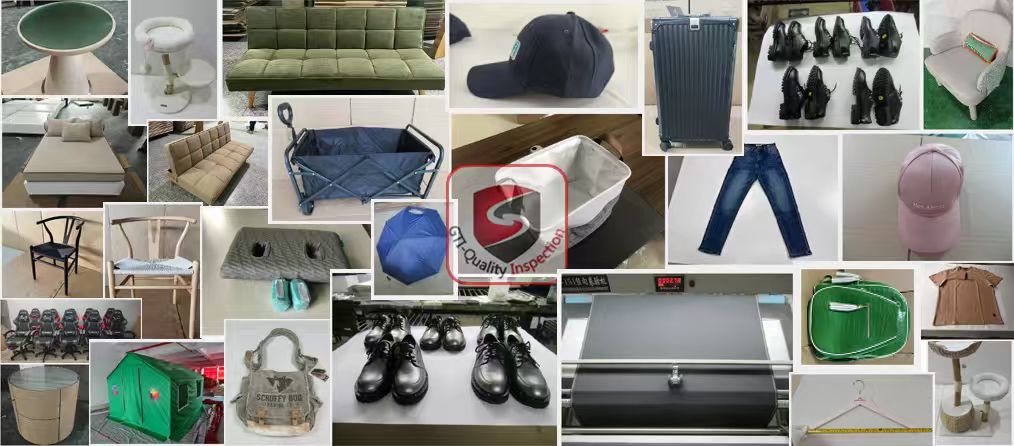
GTI Quality Inspection is a professional quality inspection company based in China. We serve importers, purchasers, manufacturers, and other businesses by offering third-party inspections, factory audits, container loading supervision, project management, and quality management solutions. Our on-site inspection services cover China, Vietnam, and Thailand.We have a team of over 100 inspectors stationed in major industrial cities across China, Vietnam, and Thailand. Each inspector receives more than 100 hours of professional training annually. -
Our Advantage
Over ten years of experience for quality inspection and management .
Provide service according to the customers' quality standard.
Professional inspection team provide service with the best price.
Provide intact and clear inspection report within 12 hours. -
Our Concept
High-effient service helps customers to ensure quality, save time and money.
Help importers from the world easier and safer to purchase commodity in China
-
Code of Practice
GTI has been actively advocating all parties in the supply chain: including customers, suppliers, manufacturers and other relevant organizations to actively establish and perfect integrity policies, company and employee conduct regulations, and promptly promote such integrity policies and regulations until all relevant parties are aware of and fully comply with, strengthen training and related work guidelines for workers in the organization to correctly handle violations of integrity and suspected bribery, and set a clear disciplinary system to deal with violations of policies.
GTI hopes that through the interpretation and sharing of these integrity policies and company regulations, we will be able to openly and frankly communicate with all parties,
Learn from each other, establish and build a company-wide system, and achieve broad consensus and cooperation in the field of anti-corruption. Our Code of Integrity and Ethics clearly guides every employee's routine work.
Complaints and Suggestions:gti001@gtiqc.com
-
Inspection standards
There are many international, national, regional and local normative standards for the production of any kind,and sometimes a single product can refer to multiple standards.GTI can help you meet or exceed these standards, thereby protecting your brand value, reducing risk, maintaining consumer confidence and reducing costs.
GTI regards these standards as the quality benchmark, and all products must be measured by this standard.
Of course, customers need to make the necessary adjustments based on the products they sell.
So whether it's complex or simple, we can work with you to make sure your requirements are met.
Statistical sampling is a widely accepted sampling method in the world. It is to determine whether
a batch of products generally meets the requirements by sampling inspection instead of full inspection.
This method can ensure the least possible cost to obtain the most accurate inspection result.
This kind of sampling inspection is especially suitable for inspection of feeding raw materials, inspection of partly finished products, inspection of products at different stages of production, and inspection of finished products.
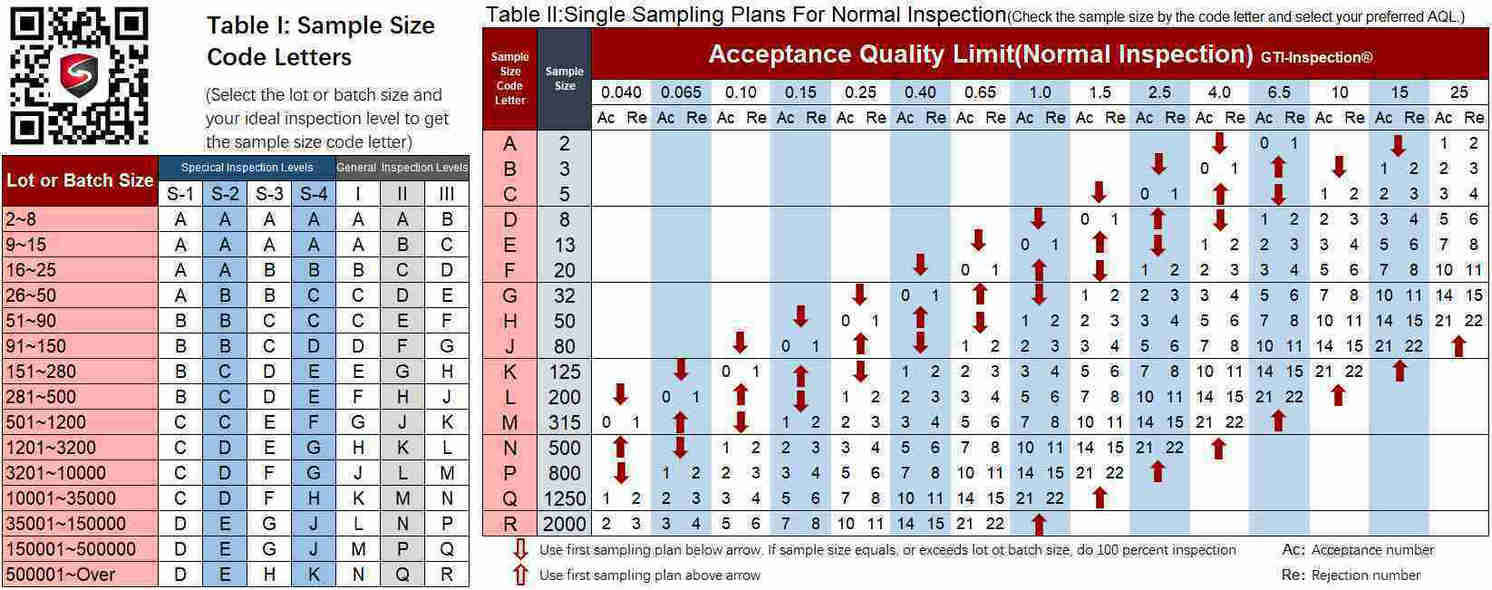
GTI uses ANSI / ASQ Z1.4-2008 as the sampling standard. This standard is widely used to determine whether a batch of goods generally meets the requirements in the case of incomplete inspection.
ANSI / ASQ Z1.4-2008 standards are equivalent to the national and international standards: BS6001, ABC105, ANSI / ASQ Z1.4 NFX 06-022, MIL-STD-105E,ISO 2859-1 and DIN 40080。
The advantage of adopting the ANSI / ASQ Z1.4-2008 standard is that after a given batch, it can give a clear number of random inspections,and at the same time give the maximum allowable number of defects under a certain number of random inspections.

-
Acceptable Quality Level (AQL)
The acceptable quality rate specifies the acceptable maximum defect ratio and shows specified defect value through percentage and makes clear the value that most buyers can accept under most cases, using a random check program.
Defects can be divided into three levels by severity:
Fatal defects: Non-compliance with product mandatory regulations and / or impact on consumer safety during application.
Serious defects: obvious appearance defects that may cause product failure, reduce product usability, and affect product sales.
Minor defects: Defects that do not affect the usability of the product, but may affect product sales or differ from the specified quality standards.
Although most customers accept these standards, we can also adjust our standards to your specific requirements. -
AQL sampling standard